Systemic conflict: The Global Airline Industry's Need to Navigate a Turbulent Operating Environment
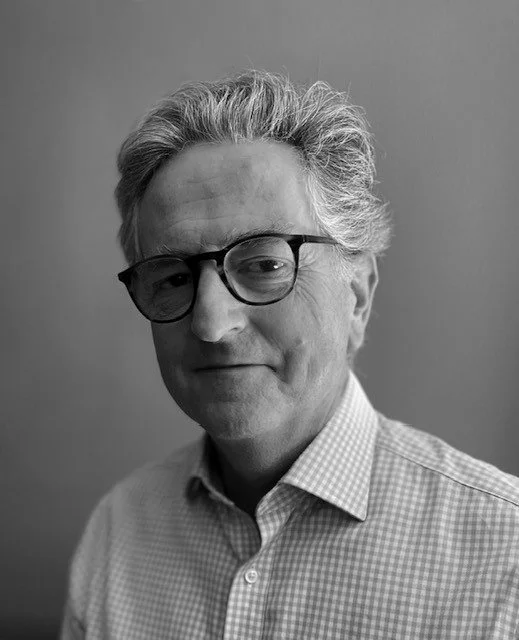
Keynote address by Guy Spindler, CEO of Earendel Associates at the IATA Risk and Insurance Management Forum, Lloyd’s of London, 4 March 2026.
Charles Dickens. One of our nation’s greatest observers of the national and international mood – both past and present. This from the opening of a Tale of Two Cities, set in the bloody aftermath of the French Revolution – a time of geopolitical turmoil just as far-reaching as our own.
“It was the best of times, it was the worst of times, it was the age of wisdom, it was the age of foolishness, it was the epoch of belief, it was the epoch of incredulity, it was the season of light, it was the season of darkness, it was the spring of hope, it was the winter of despair.”
That sense of contradiction, of a prevailing madness and a despair of uncertainty has some resonance for our own turbulent times. I am certain that turbulence is affecting so many of you who have to contend with the closure of both airports and airspace as a result of the attacks on Iran..
But, as history – and the novel – showed, Dickens wrote of a time of opportunity, not just a winter of despair. But to see those opportunities, you have to see through the despair and understand what is really happening.
In which context, what I hope to do today is to give you a new way of understanding this world by looking at it through a slightly different prism. It won’t make everything clear, but it will help – at least, I hope so.
I will also aim to demonstrate that once we have cleared away some of the fog of uncertainty, then it will be easier to see the opportunities, the ways of giving you commercial advantages, rather than only seeing problems. This depends on all of us taking the time to understand how our operating environments have changed, and developing our strategies accordingly.
At this stage, it is worth saying that when I thought I had finished preparing this address it had not mentioned Iran, even though it is a critical part of the triumvirate, along with Russia and China, that has caused so much uncertainty in the world. I shall say a few words about what is happening in Iran and how it fits into the bigger picture later, but will stick with the substance being about Russia and China. They are linked, and ultimately it is the impact of the China-US relationship, and of the subsidiary issues in Europe and the Middle East, that is more clearly directed at the long term interests of all of us in this room.
I should explain my credentials for seeking to guide you through this complex area.
I spent thirty years in the British foreign service, including postings to Moscow as the Soviet Union broke up in the late 80s early 90s, and to South Africa, Warsaw and New Delhi. And more currently my insights are from my vantage point at Earendel Associates, where we focus on the implications for corporates of this period of systemic challenge, specifically the threats posed by the package of hostile activities loosely grouped under the term ‘hybrid warfare’. We should be in no doubt that the private sector is very much in the crosshairs of this form of activity.
Current political turbulence has been some time in gestation. The idea that the West - by which I loosely mean those democratic supporters of the US-led, international rules-based order of the 1990s to 2010s – genuinely believed its own “end of history” narrative, is now an accepted commonplace.
What is less well understood is that while the proponents of the rules-based order rested on their laurels, challenger systems invested time, resource and ingenuity into developing their plan to replace it.
I note in passing that the systemic international competition or conflict which followed also links to the domestic turbulence affecting so many democratic nations. This is partly for reasons internal - the same political mindsets have driven both international and domestic policies amongst the democracies; and partly external, where domestic stresses, particularly in the very open democracies, are fuelled by deliberate societal and economic disruption mounted from outside.
So there is a great deal for us all to navigate, and my key message today will be that, while public debate tends to focus on the role of government in responding, we cannot rely entirely and immediately on States to manage this turbulence for us, or to understand or cover all of the risks and opportunities that arise. Understanding the reality of international relations is now an essential part of business leadership and the strategic capability of any organisation, public or private.
So, some observations on the geopolitical situation. I will focus on the disruptive forces, for it is they we most urgently need to understand and anticipate. In short:
Neither President Xi nor President Putin have made any secret of their shared ambition jointly to ‘make changes the like of which the world has not seen in a hundred years’. They share an ambition to see off the former US-led rules-based order and, in that, they have had considerable success. China’s Marxist-Leninist CCP shares a great deal of DNA with President Putin’s administration, which is in turn driven by his sense that the collapse of the Soviet Union was the “greatest geopolitical tragedy of the century” (NB the 20th C – the century of two world wars). Putin has a deeply-held personal determination to recover lost ground – territorially and metaphorically. But the two countries’ approaches stem from dramatically different propositions.
First, China
China is a genuine political-economic challenge to US global interests and leadership. They seek to build an alternative global economic system, and are fiercely competitive and serious in doing so. Their seductive talk of ‘win-win’ policies masks a determinedly China-centric foreign policy, increasingly driven as much by security as by economic interests.
One of their strategies has been to engage intensely with Western companies and international organisations, such as the WTO, and to exploit these to help build Chinese capability. The resulting dependencies on China of Western commercial partners, and indeed of Western economies, are now deep and structural. It is a very serious partner, but also one that carries much greater risk than is generally understood, both in terms of its intentions and its own economic challenges.
And then there’s Russia
Russia represents a very different challenge.
Moscow gambled all on the military subjugation of a Ukraine which it recognised was set on a path of social and economic reform away from Kremlin-style, oligarchical, governance. It seems that Putin badly misjudged the Ukrainian reaction; but even if he had not done so he may still have gone ahead. Successful democratic and economic reform in Ukraine would represent a grievous threat to Kremlin-style governance in Russia too. As the Ukrainians now emerge from their fourth – or tenth, if you count back to when Russian troops first set foot on Ukrainian soil - winter of war with an unshaken determination, there is a strong possibility that Putin’s 2022 gamble will not pay off.
But whether he wins in Ukraine or not, Russia will continue to be the source of destabilising challenge for years to come. It is the nature of that challenge – whether a tightly run state-security challenge in Europe and beyond, or a disintegrating state with security and military capabilities dispersing into local or private hands – that will be determined by the outcome of the war.
China-Russia
I noted that Xi and Putin are in ‘this’ together. To be clear ‘this’ is the dismemberment of the hitherto US-led international rules-based order, by engaging selectively with international law so as to preserve their freedom of manoeuvre whilst constraining that of the democracies. In this they have had considerable success, though concerns about the robustness of the domestic rule of law have been overstated - as the recent US Supreme Court judgment on tariffs illustrated.
Beyond this shared approach to disrupting the Rules Based Order, however, Russia and China are competitors for large areas of land and people, and of Pacific coastline. China has driven hard bargains over Russian energy supplies, whilst also ensuring it does not build the sort of dependencies on Russian oil and gas by which Western Europe was successfully tempted.
There was however logic in both China and the Soviet Union hedging their positions in relation to each other in the late 20th Century, and there are many Russians who worry today about the dependency they have now built on Beijing’s goodwill. This is not a relationship of equals. And it is increasingly possible to see differences in their approaches to international relations, and that public divergences will grow, to Moscow’s disadvantage
But what of The U.S.
The other great disruptive power of our age is of course the US. It is not my intention today to analyse the second Trump Administration in any detail - even if I could! - other than noting that he was elected by addressing deep-seated domestic political pressures which also affect most of the other western democracies.
However uncomfortable Europeans may feel about the style of his challenge, it is important to accept that as a democratic leader he is linking domestic and foreign policy challenges in a way that has become unfamiliar to western electorates. The concept of an ‘America First’ foreign policy has excited concern and criticism, but as is noted by Angelo Codevilla – one of the intellectual godfathers of Trump’s political agenda – ‘’No-one [in the 19th Century] needed to use the words ‘America First’. The opposite notion – that Americans are to show their own exceptionality (by doing things to or for other nations) is one that [Secretary of State 1825-1829 John Quincy] Adams and his generation would have judged insane”.
This alignment of domestic economic interests and foreign policy priorities is now baked into the Administration’s approach. (It is worth noting that Marx, Lenin and Putin would all agree that this is the right – indeed natural – order of things; and that Marco Rubio in his Munich speech underlined that Washington expects China to behave on the same basis.) We should expect the US’s disruptive challenge to continue not just through the remainder of the Trump presidency, but also under a successor of either political stripe.
It might be helpful to say a few words about the Administration’s approach not only to China and Russia, but also to Europe. I hope this is not going to be too depressing for those of you who live here.
First, China. The President’s first administration redefined the US attitude to China, in a way which was accepted by Team Biden and is now maturing under Trump II. This remains the core priority for Trump II, as set out in this extract from the recent National Security Strategy: “President Trump single-handedly reversed more than three decades of mistaken American assumptions about China: namely, that by opening our markets to China, encouraging American business to invest in China, and outsourcing our manufacturing to China, we would facilitate China’s entry into the so-called “rules-based international order.” This did not happen. China got rich and powerful, and used its wealth and power to its considerable advantage. American elites—over four successive administrations of both political parties—were either willing enablers of China’s strategy or in denial”.
The NSS now prioritises ending ‘predatory subsidies and industrial strategies; job destruction and deindustrialisation; grand-scale IP theft and industrial espionage; propaganda, influence operations, and other forms of cultural subversion’. It continues: “going forward, we will rebalance America’s economic relationship with China, prioritizing reciprocity and fairness to restore American economic independence”; and “Importantly, this must be accompanied by a robust and ongoing focus on deterrence to prevent war in the Indo-Pacific”.
The scale of China and its challenges, from economic to diplomatic to military (including nuclear) is the overarching political priority for this US Administration, and will likely continue to be so for its successors.
Second, Russia. For many Europeans, it is self-evident that the hot war in Ukraine is the security challenge of our age, both in its own terms and in its implications for whatever is left of the international order. President Zelensky recently stated that Putin had already started World War Three, and Ukraine was stemming its spread.
We are rightly discomforted by the ambiguities in President Trump’s attitudes both to the war itself and to the governments of Presidents Zelenskiy and Putin.
My sense is that Trump’s policy is shaped by a combination of the following factors:
First, a refusal to accept that President Putin’s style of governance is genuinely threatened by the prospect of successful, democratic reform in Ukraine, rather than by anything NATO may do. In as much as President Trump does sense this, it plays into his second motivation, which is sympathy anyway for the idea of great powers and spheres of influence. He is not in principle averse to the idea of Russian influence over Ukraine, in a world where he seeks influence over Greenland and Canada. This has so far been balanced by the Ukrainians’ extraordinary resolve in asserting their own interest, an approach which generates some reluctant respect from the President and his team.
As important, though, is his sense that he can negotiate a modus vivendi with Putin, to include a mega-Commercial Deal and potentially the ‘reverse-Nixon’ reset much discussed in the media. Putin’s recent pitch of a comprehensive multi-billion dollar business partnership harnessing geography, raw materials and energy, was carefully targeted. The President is showing remarkable patience in pursuit of what would no doubt be billed as the ‘greatest and most beautiful reset’, however improbable such a settlement may look from the Moscow end of the line;
And finally there is the ambivalence about involvement in Europe. As noted above, China is The Priority, and even there the NSS makes much of the importance of regional allies. For the US – and they have of course been building up to this over serial administrations – it is self-evident that, if the North Atlantic Alliance means anything, prosperous Europe should take on the lion’s share of the burden on their own continent; whilst also being supportive of the US on China. Washington worries that what it in fact sees is a failure – political as much as financial and military – to play a proper part in European security, and ambiguity in Europe’s attitude to China. It is hard to overstate the importance of this story to the North Atlantic Alliance.
The conversation in Europe on this is moving at pace: there is a real sense of urgency now, in Brussels and some Member State capitals, about both the security issue and about the industrial and economic consequences of the staggering trade imbalance with China. The EU has developed and prospered in part because the US security umbrella has given it the space to ‘fall forwards’ through a series of political and economic challenges. But this umbrella is now much less assured, and the security challenge will require not only financial and technical investment but also complex political decisions on the distribution of and control over hard power which the EU was in many ways designed to make impossible.
Meanwhile some countries in Europe – Poland, Germany, the Baltics and Nordics – are now moving forwards unilaterally to rebuild their military and defence capabilities. There is even now occasional debate about a European nuclear umbrella.
This is all highly complicated, politically, and financially expensive, and nothing in the EU’s history or political architecture equips it easily to take this forward. Europe faces very considerable political challenges in responding to the current rate of political change in international relations.
It is symptomatic of the pace of events that when I was, last week, thinking about this conference, I was not intending to discuss the Middle East. The events of the weekend obviously change this. First in Venezuela and now in Iran, we have seen the US not just intervening to remove long-term hostile forces; but also gaining influence over key energy supplies (including to China); and disrupting Chinese (and Russian) vectors of global operational and political capability. And doing all of this in a way which focusses on expanding US commercial and private sector influence, rather than on the good governance priorities of recent decades. This is a revolutionary change in Washington’s approach to international relations, not a continuation of the interventions in Afghanistan and Iraq, the fate of which will now be much influenced by the decisions of the Iranian people, just as Putin’s (wholly different) model has been judged (and in his case, rejected) by the Ukrainian people.
And the gulf between Washington and Europe becomes still harder to disguise or ignore.
I said I would say a few words about the implications for institutions, including corporate, of this state of affairs. I referred in my opening to the ‘challenger nations’ - particularly Russia and China - using the ‘end of history’ period to develop their challenge to a rules-based order. The overwhelming military superiority of the West at the time forced ingenuity and innovation. And herein lies a key change about this era of geopolitics as opposed to previous eras: the emergence of so-called ‘sub-threshold’ techniques for undermining the interests of competitors, drawing on the experiences of non-state as well as state actors, harnessing fast moving technological and information resources, exploiting access to the Western system opened up in the 90s and after not least the WTO. I strongly recommend David Kilcullen's ‘The Dragons and the Snakes’ for an account of this learning process, in particular between state and non-state actors.
The skills and operational techniques so developed are now broadly grouped under the heading ‘hybrid warfare’, a term which is accurate without necessarily being very helpful. At its core is that actors are deploying a range of (usually) non-kinetic tools to undermine the other side, to take benefit from them, to generate comparative advantage; and that these are asymmetric and full spectrum in their application. Bombs and bullets are not deployed against us in the UK, but software and social media, cyber and sabotage are. Almost every day.
Empowering all of this are the extraordinary changes in information and communication technology, fundamentally changing the nature of domestic and international relationships.
And so we read about sabotage of infrastructure, whether on the seabed or on dry land; about killings of political opponents overseas; about cyber-attacks; about enabling illegal migration; about partnerships with organised crime groups; and so on.
The key point here is that ‘geopolitics’ has in some senses moved from being the preserve of Princes, chancelleries and Ambassadors; to being the driver for hard operational activities targeting the well-being of the other side. And in this, challenger states do not distinguish between state and private interests as in the past: everyone, and certainly any financially or technically significant organisation, is a target. As Jaguar Land Rover – amongst many others – discovered not only to its own cost, but also to the cost of the UK economy, to the tune of nearly two billion pounds.
Perhaps the highest profile and most confusing tool in the locker is that of information warfare, whether about specific disinformation campaigns; manipulating the social media environment; interfering in elections; energising activist campaigns against corporates; or generally shaping other countries’ information environments to your own national advantage.
Public debate about this has been hampered by the domestic politicisation of the ‘disinformation’ label and sector. The overall impact has been to confuse our ability to engage effectively with a genuine challenge in the information space.
One of our key defences against hybrid warfare must be for corporates to understand the nature of the challenge that these full spectrum activities pose specifically to them and to their business model, and to structure themselves and their policies, and to build and implement strategies accordingly. Those who do so first will gain a window of competitive advantage.
For example, what can now be considered ‘force majeure’ in contract law?
In the insurance market, what is a ‘war risk’ in this new age?
Are corporate transactions structured to ensure enduring reputational and financial benefits, in this more complex age?
Corporate governance is not usually designed to ask or answer these questions, but they require real attention during this protracted period of rapid change.
In conclusion: these are interesting times, in some senses already ‘too interesting’. All sides face challenges not previously experienced, such that we do not have the language to describe what is underway, let alone the tools to respond and exploit. Our political systems are starting to acknowledge the challenges, although not in many cases the link between domestic and international aspects. This will all come in time.
But meanwhile my key message to you today is the need for all of us to recognise the extent to which our operating environments have changed, and to adapt our own approaches with as full an understanding as we can manage of both the threats and the opportunities with which this new paradigm confronts us.
Thank you.